Showing posts with label 2015. Show all posts

Saturday, 19 March 2022

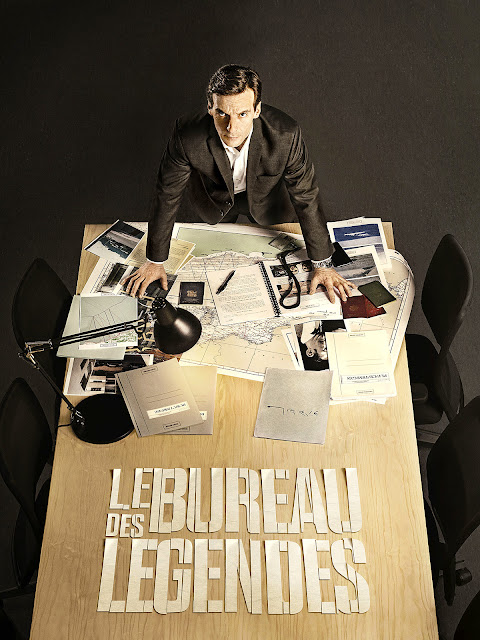
The Bureau (2015; Season 1)


 ☆ ☆ ☆ ☆

The Bureau (2015; Season 1) – E. Rochant

I love a good spy yarn (epitomised by those great miniseries featuring Sir Alec Guinness as George Smiley: Tinker, Tailor, Soldier, Spy, 1979; and Smiley’s People, 1982). Those complicated plots, with a harsh light cast on loyalty/disloyalty, truth/falsehood, secrecy/breach, are endlessly appealing. Anyone could be a mole, any mission could come a cropper – and in this compulsively watchable French series, failure is omnipresent. Mathieu Kassovitz plays Guillaume Debailly a.k.a. Malotru a.k.a. Paul Lefevbre who has recently returned to Paris from a six-year undercover operation in Damascus. He may have “alias syndrome”, a difficulty in giving up the freedom of being someone else – this is exacerbated when he accidentally runs into his lover (undercover lover?) from the Damascus days, Nadia el Monsour (Zineb Triki), now in Paris ostensibly involved in cultural exchange (but perhaps something else?). Although distracted, he is required to lead the DGSE (French Intelligence) in their search for an agent (“Cyclone”) who has gone missing in Algeria, possibly abducted, possibly a double agent. These parallel threads (the hunt for Cyclone, the entanglement with Syria) are joined by a third plot strand focused on a new agent, Marina Loiseau (Sara Giraudeau), who goes undercover as a seismology PhD student with the challenge of being selected to join a research team in Iran led by an Iranian professor visiting the Earth Science Institute in Paris. Each of these plots takes a winding and precipitous route through the 10 episodes of this first series – but shockingly only one of them resolves!  Now I’m invested and will have to move on to Season 2 (2016). Absorbing, escapist, filled with great acting and nary a false step.

Sunday, 26 January 2020

Embrace of the Serpent (2015)


☆ ☆ ☆ ☆


Embrace of the Serpent (2015) – C. Guerra

Director Ciro Guerra’s film offers an indigenous perspective on colonialism, presenting interactions between Karamakate (played by Nilbio Torres when young and Antonio Bolivar when old; both actual indigenous actors), a Shaman who has survived the eradication of his people and two White researchers, Theo (Jan Bijvoet) in the early 1900s and Evan (Brionne Davis) in the early 1940s.  The film alternates between these two encounters. Although one would expect greater devastation in the later era, it seems pretty bad at both timepoints, as rubber barons have already begun their conquest of the peoples and the land when the film begins.  Religious missionaries (traditional and self-made) seek to “save” the people and convert their beliefs.  Both researchers claim to be searching for the healing plant yakluna but their real motives may be hidden (and what they would do with yakluna, which also has psychedelic properties used in shamanistic ceremonies) is unclear. What is clear is that, for indigenous peoples, the coming of Europeans and their capitalistic ways represented destruction of their culture and their environment. The message for our current world couldn’t be more overt, even though the movie isn’t preachy and keeps things implicit.  Filmed in beautiful B&W in the Amazon rainforest of Colombia, the movie would have been a sight to behold on the big screen. There are some very surrealistic episodes (including a trippy experience in colour).  Of course, the film harkens back to Werner Herzog’s Aguirre (1972) and Fitzcarraldo (1982), but that director only showed us the folly of the colonialists and not the sadness and bewilderment of the people destroyed by them.

Thursday, 18 April 2019

Hitchcock/Truffaut (2015)


☆ ☆ ☆ ☆


Hitchcock/Truffaut (2015) – K. Jones

Film critic Kent Jones wrote and directed this documentary about the making of (and reaction to) the famous book of conversations between director Alfred Hitchcock (then 63) and acolyte and French new wave director Francois Truffaut (then 30).  The book runs through Hitch’s entire oeuvre with his frank and seemingly unguarded and unpretentious thoughts about each film (originally up until The Birds, 1963, but later updated to include the later films, including Family Plot, 1976, based on further correspondence between the directors). Although this documentary does involve an array of talking heads (David Fincher, Wes Anderson, Olivier Assayas, James Gray, Paul Schrader, Richard Linkater, Peter Bogdanovich, and of course Martin Scorsese), it is really the clips from Hitch’s work and the discussion of them that is the highlight.  Extended treatment is given to Vertigo and Psycho (and there is an interesting nugget about The Birds) although most films get only a light touch and many none at all.  Occasionally we hear recorded excerpts of the actual tapes (including some rather risqué comments that I don’t remember in the book!). The take home point is that Truffaut’s book helped people to see Hitchcock as an artist who knew how to manipulate audiences with (and even changed) the language of cinema (stemming from his training in the silent days) and also invested many of his personal concerns (and perhaps pathologies) into his films as a true auteur.  Although not in the film, a trivia item on imdB.com argues that Truffaut’s book (released in 1967) resulted in Hitchcock becoming too self-conscious and therefore never making another good film!  (It’s an interesting hypothesis but I reckon Frenzy and Family Plot are not too bad). Although I myself would have enjoyed a deeper analysis of each film (with clips), I guess I always have the book to turn to, sitting proudly on my cinema shelf.  Still a fun watch if you are a Hitchcock fan!

Thursday, 25 October 2018

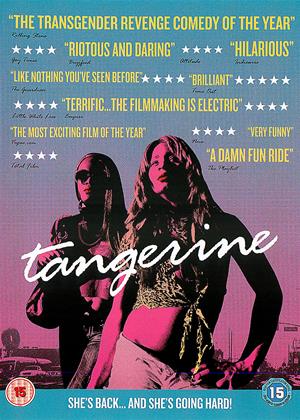
Tangerine (2015)


☆ ☆ ☆ ☆


Tangerine (2015) – S. Baker

A shocked response to the over-the-top people and events in this film gradually gives way to a feeling that the director’s main goal is to present an unfamiliar subculture, without judgment (or even analysis), to a more mainstream audience.  The subculture is that of a group of Hollywood transgender prostitutes who turn tricks, do drugs, fight with each other, fuss about their wigs and make-up, and deal with problems in their relationships (including cheating) as best they can.  Director Sean Baker shot the film using iPhones, but you can’t really tell (apart from a general low-budget on-location feel), and the seedy streets of Los Angeles often look stunning, bathed in the tangerine light that gives the film its title.  Kitana Kiki Rodriguez and Mya Taylor play the two central characters, both actually trans females who provide a strong degree of authenticity to the film, and the way they maintain their friendship throughout the “drama” is the main theme of the film.  All around them seems to be unstable, even chaos – but this may be the world to which those who are extremely stigmatised may be relegated.  Poverty, exclusion, and violence seem commonplace but somehow these women maintain their optimism and determination (even if sometimes misguided).  A subplot follows an Armenian taxi driver who patronises the girls despite having a wife and family of his own (who are horrified to learn about his extra-marital affairs); this provides another contrast between acceptance and non-acceptance. It is hard to tell too whether they are being exploited or loved by their pimp, Chester (James Ransone) whose cheating is the engine that drives the plot.  Eye-opening and definitely not for the timid!


Friday, 19 October 2018

Son of Saul (2015)


☆ ☆ ☆ ☆


Son of Saul (2015) --  L. Nemes

There’s nothing like a movie about the Holocaust to put everything in perspective -- and Son of Saul is a very visceral and intense move about the Holocaust that can’t help but overwhelm.  Part of this tension is created by the strategy of keeping the hand-held camera close to the protagonist, Saul (Géza Röhrig), a member of the Sonderkommando, a group of concentration camp prisoners who are engaged in the dirty work of the camps, dealing with those who are gassed to death before and after they die.  This camera style means that often we see the horrors of the camp only at the periphery of our vision – or suddenly in full view, if the camera happens to look in a particular direction. In fact, as Saul moves through the day and across different locations in the camp, it becomes very clear that writer-director László Nemes’ real goal is to show us what happened in the camp (Auschwitz, in particular) in all its confronting and terrible detail.  Sure, there is a plot:  Saul becomes obsessed with finding a rabbi to say prayers over the body of a young boy who he comes to call his “son” before he buries the boy.  However, the plot feels very much like a means to an end, a means to show us this horror, although Saul’s sad and ill-fated, perhaps confused, obsession also seems a likely reaction to his role, a way to assuage what must be terrible guilt and sorrow.  The sonderkommando as a group are not well differentiated – they are angry tense men who eventually stage a futile escape attempt (based on true events).  The German soldiers are portrayed as cruel, using distancing strategies to dehumanise their victims.  It is the worst of human nature (an understatement if ever there was one), recreated vividly onscreen.  Forcing yourself to watch with your eyes open seems an important reminder to be mindful of those who are unjustly stigmatised among us.  And all the little trials and tribulations of your daily existence become small in comparison.


Thursday, 1 June 2017

Room (2015)


☆ ☆ ☆ ☆ ½


Room (2015)


I sometimes ask myself why I would knowingly choose to watch an emotionally crushing horror movie such as this (and it is definitely a horror movie).  The answer is probably that Brie Larson won the Best Actress Oscar, I liked her in Short Term 12, and I didn’t look at the plot description when I placed this in my queue.  But I’m glad that I did, as painful and affecting as it was.  Larson plays a woman who has been kidnapped and locked in a small garden shed, kept as a sex slave by an evil Ohio loser for seven years; she’s had a son, played by Jacob Tremblay, and he is now 5 years old and has only known the shed (which they call “Room”) as his entire world; the outer world he knows just through TV and it is not treated as real.  Their life is seriously horrible but as it is all that Jack knows, he accepts it and even cherishes it.  He does not dream of escape as “Ma” (Larson) does.  The film makes you wonder how he (or they) would cope if escape really did come true, the effects of this kind of sheltered existence on them, and the severe trauma of it all.  It is all so devastating and executed with nary a hint of falseness in the acting by all involved.  Watch it. 


Friday, 10 March 2017

High-Rise (2015)


☆ ☆ ☆ ☆


High-Rise (2015) – B. Wheatley

I haven’t read the J. G. Ballard novel nor have I seen any other movies directed by Ben Wheatley.  So, I came at this more-or-less completely cold…and it knocked me for a loop.  A 1970s high rise apartment building in London (part of a complex designed by Jeremy Irons’ Architect) loses power, the residents lose their moral bearings, and we are cast into a dystopian nightmare where society breaks down into all-out class warfare.  Sort of what climate change and the widening gap between rich and poor might bring on, I think.  But in the UK, the class differences seem already firmly acknowledged and thus the ingredients for conflict are more omnipresent.  Except nothing is that clear in the film.  Our protagonist, played by Tom Hiddleston, is a medical doctor, specializing in lobotomies and brain scans, who moves into the building near the middle floor (25th) and has various interactions with those above him (rich) and below him (poor).  He seems to have no real moral compass at all but might be working through his grief (family all dead) with passive aggression and a tidy apartment that he paints grey.  There are a lot of parties in this building.  Wheatley engages in all sorts of cinematic experiments (slow-mo, psychedelic kaleidoscopic split frames, travelling shots, interesting angles) and pushes the boundaries of sex and violence as far as they should go.  I’m not recommending this to anyone who might be easily affronted. And really it is all a bit of a glorious mess but thrilling and weird and better than Hollywood.


Friday, 14 October 2016

Spotlight (2015)


☆ ☆ ☆ ☆


Spotlight (2015) – T. McCarthy

Investigative journalism can be exciting -- and Mark Ruffalo, Rachel McAdams, and Michael Keaton, among others, help to make it so.  Taking a page from All the President’s Men (1976), director Tom McCarthy tells us the story of the Boston Globe’s Pulitzer Prize winning exposure of the Catholic Church’s cover-up of an epidemic of paedophile priests.  The story is still reverberating today and around the world.  Despite the absorbing nature of the hunt for clues, evidence, or a smoking gun, at its heart this is a profoundly depressing story.  After all, it is child sexual abuse we are talking about.  Howard Shore’s music is suitably downbeat and ruminative.  The actors temper their zeal with gravity.  Yet, is the issue really given enough of a serious treatment?  Viewers may be able to focus on the newspaper room without having to think too carefully or clearly about abuse, even though we hear victims describe their experiences and are told that many have committed suicide or engaged in self-defeating behaviour.  Not that I’d want to watch a more harrowing version of this – so perhaps the journalistic thriller genre is the best way to bring the issues into the public eye (if they weren’t already).  McCarthy and Josh Singer won the Oscar for their screenplay, which is all talk but engaging and not sensationalistic, and of course the film won the Best Picture Oscar as well.


Saturday, 6 August 2016

The Martian (2015)


☆ ☆ ☆ ☆


The Martian (2015) – R. Scott

Ridley Scott seems to know what he is doing.  He manages to guide this blockbuster on its safe journey, hitting all the necessary highs and lows and with the requisite smart-ass dialogue in tow.  In many ways, this story of an astronaut left behind on Mars (not a spoiler since this happens in the first 10 minutes) feels like a true story – but of course it’s not (and one wonders if NASA will ever get to attempt anything like manned voyages to Mars, given present and future budget problems).  Still it works as a faux replay of a story that we know will end well – it is just the process of getting to that happy ending that we need to watch.  Scott, aided immensely by Matt Damon (playing his usual average Joe), keeps the plot moving for more than two hours with intermittent crises and successes.  The rest of the cast play as a collective, trying to rescue him.  You can feel the problem-solving happening.  All the pieces fit together.  Even the familiar music used on the soundtrack takes on new relevance in this context (Bowie’s “Starman” and the closing “I Will Survive” which somehow remarkably references outer space in its opening lines).  The CGI is fine.  I was manipulated and I enjoyed it.


Sunday, 17 July 2016

Hail, Caesar! (2015)


☆ ☆ ☆ ☆


Hail, Caesar! (2015) – J. Coen & E. Coen

I’m a movie nerd, so I found the Coen Brothers’ latest homage to the old days of the Hollywood studio system highly enjoyable.  Josh Brolin (channelling Brian Donlevy?) plays Eddie Mannix, The Fixer, who prevents the stars from causing scandals and keeps the day-to-day production routines running smoothly (mediating between the studio head and the directors and stars, fending off gossip columnists, engineering publicity stunts, etc.); apparently he’s based on a real figure from MGM’s golden days.  This time, star George Clooney has gone missing, presumably on a bender but actually kidnaped by a communist cell (screenwriters, of course).  Other real Hollywood luminaries also make appearances:  Scarlett Johannson facing a Loretta-Young-styled pregnancy scandal, Ralph Fiennes as a fastidious British director, Tilda Swinton in a dual role as duelling gossip colunnist sisters, Channing Tatum as a dancing star.  The events as laid out hew pretty close to what is known about Hollywood history – no surprises here and not much attempt to critique or revise.  However, the loving recreations of classic genres (the Busby Berkeley synchronised swim, the western, the very gay musical, the sitting room drama, and the sword and sandals religious epic) are top notch.  I chortled out loud on numerous occasions and the Coens’ intelligence is on display discussing some pretty high level content (religion, communism) that doesn’t often make it to the mainstream cinema.  This isn’t a masterpiece but it fits well into the upper half of the filmmakers’ oeuvre.


Friday, 20 May 2016

Inside Out (2015)


☆ ☆ ☆ ☆


Inside Out (2015) – P. Docter

I’m a psychologist and I do have to deliver an hour lecture on emotion every year, so I came to this film, knowing that Paul Ekman and Dacher Keltner (high profile emotion researchers) were consultants on it, as a kind of homework assignment. So, yes, I was here out of a sense of duty rather than because I thought the film would be good.  I can’t say that I’m a huge fan of animation for kids (apart from Miyazaki films).  However, I found Inside Out to be a highly enjoyable, even emotional, experience.  Knowing the science behind emotion may have helped, although it is probably lightly fictionalized (or subject to poetic license) in the film.  Basically, we follow Riley, an 11-year-old girl, who is literally controlled by her emotions from a command tower inside her brain.  The basic emotions are all here:  joy, sadness, anger, fear, and disgust (no room for surprise, I guess).  The film sketches out their functional role by showing how Riley’s emotions guide her behaviour and also dictate others’ reactions to her.  For example, sadness helps to elicit sympathy and help from others.  The events that provide the opportunity to display and detail Riley’s emotions revolve around her family’s move from Minnesota to San Francisco; any kid that has moved knows the mixed emotions that this would entail.  Things feel pretty honest and also moving.  Pixar’s animation doesn’t let things down.  Thumbs up from me, but I wouldn’t show it to my six year old – yet.


Tuesday, 29 March 2016

The Witch (2015)


☆ ☆ ☆ ☆


The Witch (2015) – R. Eggers

Set in New England around 1630 at the desolate homestead of a Puritan family exiled from the local plantation for adhering to a variant stream of religious thinking (it seems), The Witch never hides the fact that Satan (and his titular minion) exists. Yet, viewers are still kept off guard, not knowing who will prevail as one torment after another befalls the family of six.  As desperation sets in, even the parents become unsure of themselves and their own children, believing that any one of them could have pledged allegiance to the dark one – or his incarnation as a goat named Black Phillip.  Although the film is intentionally drab and autumnal, the soundtrack is full of spooky musical highlights that heighten the suspense.  It is a credit to the filmmakers (first-time director Robert Eggers) that this really could be the 17th century -- and the wide expanse of uncivilized nature is frightening (but should it be?). We do know that the eldest daughter Thomasin (played by Anya Taylor-Joy) is not a witch but after all of her tribulations and the hostility she receives in error, who would blame her if she followed the left hand path?  Genuinely unsettling.


Monday, 21 December 2015

Star Wars: The Force Awakens (2015)


☆ ☆ ☆ ☆ ½


Star Wars: The Force Awakens (2015) – J. J. Abrams


I saw the first Star Wars in the theatre in 1977 with my dad.  Now, 38 years later, I thought I’d see the new one in the theatre (in 3D) on a whim on the hottest day of the summer so far.  I’m not a zealous fan, particularly after all of the disappointments and I didn’t even watch the 6th/3rd film.  So, it is a very pleasant surprise to say that J. J. Abrams and his team have pulled it off and recreated the magic of the very first Star Wars.  They have done this by essentially making this new film a remake of the first, with enough plot similarities to cause anyone to raise an eyebrow and, of course, to delight those fans who know the films inside and out.  Let’s call it an emotional remake, if not an exact replica – the music of John Williams helps on this score.  However, the real key to success, I think, is a generous helping of Harrison Ford; it is great to be back in the presence of the wisecracking but sentimental Han Solo.  Of course, there is lots more nostalgia to be had, but the new cast, particularly Daisy Ridley and John Boyega, more than hold their own.  That’s another after-image from 1977 – the feel that a cast of unknowns has been thrust into a blockbuster.  Naturally, not everything works perfectly – the relationship between Han and Leia and their son feels forced (I kept thinking who is this guy and what part of the story did I miss?).  But the schematic plot, the dazzling action, and the giddy fun of returning to one’s childhood memories make this highly recommended – if you are in the tribe (more or less).